
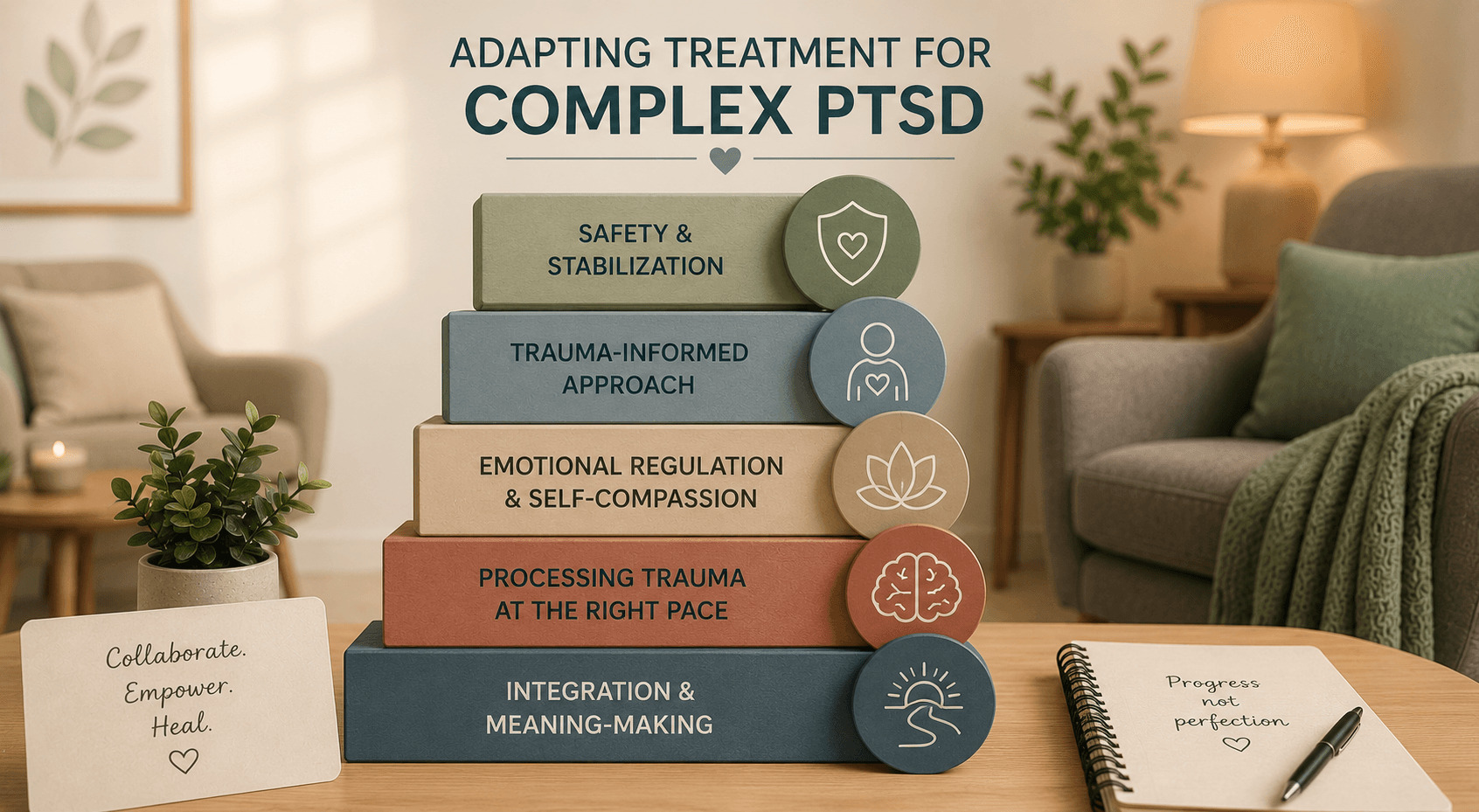
- Complex PTSD (cPTSD) involves more than distressing memories; it affects the body, emotional regulation, and the client’s sense of self and safety.
- Stabilization and safety-building must come before any trauma processing work.
- Emotional regulation skills, dissociation management plans, and client-led pacing are all core components of effective cPTSD treatment.
- Setbacks are an expected part of the recovery process; progress should be measured in small, consistent steps.
- Clinician self-care is essential when working with complex trauma presentations.
Complex Post-Traumatic Stress Disorder (cPTSD) is not simply “a lot of bad memories.” It lives in the body. It shows up as intense reactions to triggers, dissociation, and profound difficulty with self-soothing. Sessions with clients experiencing cPTSD can feel layered and unpredictable. One wrong step and the therapeutic work can become overwhelming.
The role of the therapist is not to clear everything at once. It is to offer steady guidance, help clients feel safe enough to take one step at a time, and walk alongside them through the process.
Establish a Safety Net Before Addressing Trauma
Walking into therapy with cPTSD can feel like stepping onto a tightrope without a net. One of the most meaningful things you can do is build that safety net before approaching the heavier content of trauma processing.
You might offer a grounding object, such as a stress ball or textured item, or suggest a phrase the client can use quietly when things feel overwhelming. Simply knowing that someone is present and paying attention can itself be regulating for a nervous system that has been hypervigilant for a long time.
Check the practical basics too: ask about sleep quality, current stressors, and existing coping strategies. If a client is struggling with any of these, explore simple supportive strategies together before progressing to deeper work. Stabilization is like building a sturdy bridge before crossing a river. Without it, therapeutic progress remains fragile.
Support Cannot Be Rushed
Trauma therapy with cPTSD clients is not about leaping over the river in one bound. Begin by helping clients feel grounded and regulated, a skill clinicians can deepen through trauma-informed therapy continuing education courses. Once that foundation is established, traumatic material can be approached gently.
If a client begins to shut down or dissociate, pause. Simple grounding techniques, such as noticing the feet on the floor or taking slow, deliberate breaths, act as handholds that prevent the client from becoming overwhelmed. Slow, steady progress is far more effective than rushing and risking a setback.
Help Clients Regulate Their Emotions
Clients with cPTSD often feel swept away by intense and rapidly shifting emotions. Your role is to provide them with an oar and show them where to push against the current. Teach clients to notice what is happening in their body, help them identify and name what they are feeling, and introduce simple tools such as paced breathing, gentle movement, or self-soothing strategies to help them stay regulated.
Practice these skills in session so that clients have access to them when life becomes difficult outside of therapy.
Plan for Dissociation
Dissociation is the brain’s protective response when emotional intensity becomes too great. Help clients recognise when it is beginning to happen, and agree on a simple plan for returning safely to the present moment. Grounding anchors, such as pressing their palms together, naming objects in the room, or taking slow breaths, can help guide them back. Discussing this plan when the client is calm and regulated makes it far more accessible during difficult moments.
Let Clients Lead: Collaborative Goal-Setting and Pacing
Many clients with cPTSD experience the deepest healing when they feel a genuine sense of control over their own therapeutic process. Check in regularly: “Do you want to slow down?” or “Shall we pause here?” Allow clients to set the pace and define their own goals, even small ones, throughout treatment.
Take Care of Yourself Too
Working with complex trauma is emotionally demanding. Pay close attention to your own body and internal responses. Step outside for fresh air between sessions, stretch, or debrief with a supervisor or trusted colleague. You cannot guide a client through difficult terrain if you are not attending to your own wellbeing. Self-care in this context is not optional; it is part of practicing safely and sustainably.
Expect Ups and Downs
Recovery from cPTSD rarely follows a straight line. There will be setbacks, sessions that feel like regression. That is an expected part of the process, not a failure of treatment. Celebrate every small step forward, whether that is a moment of insight, a new coping skill used successfully, or simply the act of showing up. Healing, like tending a garden, requires steady, patient attention.
Continue Your Learning With Zur Institute
If you want practical tools to navigate complex trauma work, Zur Institute offers continuing education for counselors designed to support trauma-informed clinical practice at every stage of your career.
Frequently Asked Questions
What is complex PTSD and how is it different from PTSD?
Complex PTSD (cPTSD) typically develops following prolonged, repeated trauma, often involving interpersonal harm such as abuse or neglect, rather than a single traumatic event. In addition to the core PTSD symptoms, cPTSD involves significant difficulties with emotional regulation, a distorted or damaged sense of self, and persistent problems in relationships. Treatment generally requires a longer stabilization phase before trauma processing begins.
What is the recommended treatment approach for complex PTSD?
Treatment for cPTSD typically follows a phased approach: first establishing safety and stabilization, then processing traumatic memories, and finally integrating those experiences into a broader sense of self and life. The pacing of each phase is determined by the individual client’s readiness, not by a fixed timeline.
How do I manage dissociation during a therapy session?
Have a grounding plan agreed with the client before dissociation occurs. When signs appear, pause the session content and use simple anchoring techniques such as naming objects in the room, encouraging the client to feel their feet on the floor, or using a structured breathing pattern. Avoid pushing deeper into emotional content until the client is fully reoriented.