
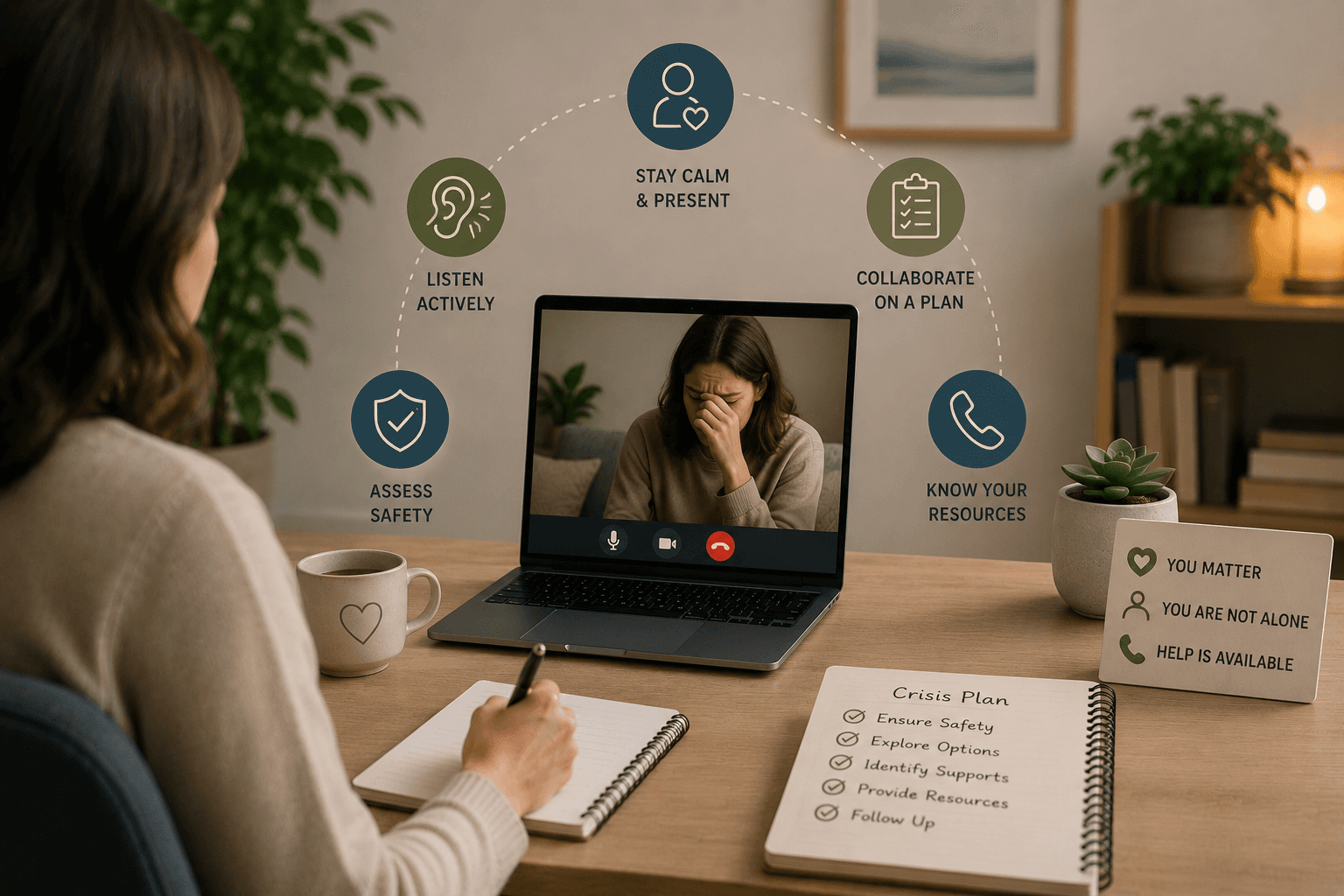
- Telehealth removes the clinician’s physical control over the client’s environment, requiring a significant shift in crisis preparation and risk management.
- Silence or unresponsiveness in a virtual session should be treated as a potential medical emergency until confirmed otherwise.
- Verifying the client’s specific physical location before every session is a non-negotiable safety protocol.
- A secondary device is essential for contacting emergency services without losing the video connection to the client.
- Clinicians must debrief and process virtual crisis events; witnessing helplessness through a screen creates its own form of occupational stress.
In a physical office, the clinician holds a great deal of environmental control. We know the address, the layout, the nearest hospital, and the exact protocol if a session escalates. We can physically assess how a client presents, intervene if necessary, and manage the environment around us.
Telehealth removes that control. The clinician becomes a presence on a screen, potentially hundreds of miles away, while the client navigates a crisis in a space that cannot be directly accessed or managed. This shift in medium requires a corresponding shift in risk management preparation. It is important to approach every session with protocols in place, as though this could be the one where the safety net is needed.
The Ambiguity of Silence
Mental health professionals are trained to recognise loud crises: active suicidal threats, visible distress, or escalating agitation. However, medical emergencies in virtual settings can be deceptively quiet. A client experiencing an overdose or a seizure may simply stop responding. They may appear frozen, or just tired.
In a video call, the instinct is to blame the technology, to assume the connection has dropped. This assumption can be dangerous. If a client becomes unresponsive and does not reconnect within a very short period, the situation should be treated as a potential medical emergency. Waiting ten minutes to see if they log back in is a natural impulse, but it carries serious risk. Treat silence as a clinical symptom until it is confirmed otherwise.
Verify the Client’s Location Before Every Session
One of the most significant logistical vulnerabilities in telehealth is not knowing where the client actually is. “At home” is not an address that emergency services can use. Before every session begins, verify the client’s specific physical location.
If they are at home, do you have the full address including any access details? If they are joining from a vehicle, where exactly are they parked? “A parking lot near the shops” is not sufficient for a 911 dispatcher. Establish the practice of asking: “Which street are you on?” or “What is the make and color of your car?” This information, captured in session notes, can be the difference between effective crisis intervention and a critical delay.
The Second Device Protocol
When a virtual crisis occurs, the clinician becomes the link between the client and emergency services. Managing a video session and calling emergency services on the same device is not feasible without losing visual contact. Conducting telehealth sessions on a laptop or tablet while keeping a phone within reach solves this problem.
When contacting emergency services, you are functioning as the dispatcher’s eyes. Be prepared to provide the exact address, the nature of the emergency, relevant clinical history such as known medications, and to remain on the line until first responders are physically present with the client. Maintaining that digital connection until a physical transfer of care occurs is your primary duty during a virtual crisis.
Processing the Event Afterwards
Witnessing trauma through a screen creates a distinctive form of helplessness. You are present and deeply invested, yet physically absent. Clinicians often experience shock, intrusive “what if” thoughts, or heightened anxiety after a virtual crisis event.
Processing this experience is not optional. Consulting with a supervisor or legal counsel immediately after the event is important for reviewing your response and ensuring documentation is comprehensive and accurate. Virtual crisis events are also worth bringing to peer consultation or supervision as learning experiences that benefit both the individual clinician and the broader practice community.
Strengthen Your Practice With Zur Institute
Understanding the complexities of telehealth requires current knowledge of ethics, risk management, and crisis protocols. Zur Institute offers ethics and risk management training for mental health providers designed to keep your practice compliant and resilient in a digital clinical environment.
Frequently Asked Questions
What should I do if a client becomes unresponsive during a telehealth session?
Do not assume it is a technical issue. Attempt to re-establish contact immediately by calling the client’s phone. If they do not respond within a very short period, use the location information you verified at the start of the session to contact emergency services on your secondary device. Stay on the video call and the emergency services line simultaneously until first responders are confirmed to be with the client.
Am I legally required to verify a client’s location before every telehealth session?
In many jurisdictions, documenting the client’s location at the start of each telehealth session is both an ethical best practice and a regulatory requirement. Requirements vary by state and professional license type. Clinicians should review the relevant telehealth regulations for their license and jurisdiction and ensure this information is documented in session notes.
How do I prepare clients for the possibility of a crisis plan in telehealth?
Discuss crisis procedures as part of informed consent when establishing telehealth services. Cover what the client should do if they are in danger, how you will contact emergency services if needed, and who in the client’s local area can be contacted in a crisis. Reviewing this plan periodically, particularly with higher-risk clients, ensures it remains current and accessible.