
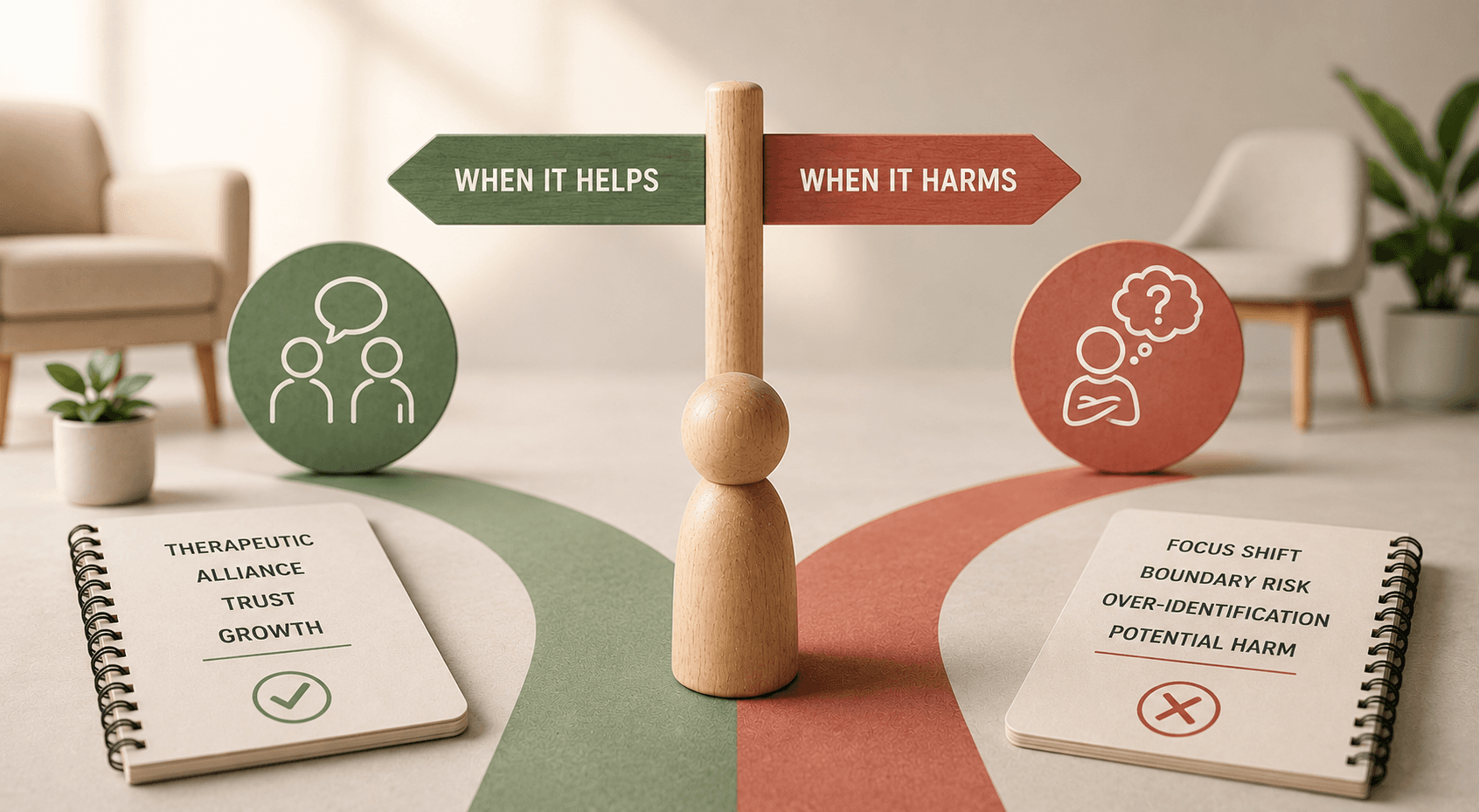
- Therapist self-disclosure can build trust and normalize client experiences when used thoughtfully and selectively.
- Oversharing or sharing impulsively can shift the session’s focus away from the client and blur professional boundaries.
- Ethical self-disclosure must always serve the client’s therapeutic needs, never the clinician’s.
- Key questions to ask before disclosing include: Is this relevant? Is it brief? Does it support the client’s growth?
- Ethics training for mental health providers can help clinicians develop clear, consistent self-disclosure practices.
As a therapist, you have probably thought: “Should I share a bit of my own experience with this client?” It is a genuinely complex question. A little sharing can make you more relatable, build trust, and model healthy coping. But if handled poorly, it can upset boundaries, shift focus away from the client, or slow their therapeutic progress.
Many therapists wrestle with this, particularly when working with clients who are hesitant to open up. The challenge is not simply whether to share, but how much, when, and why. Some therapists overshare in an attempt to connect. Others hold back entirely out of fear of being unprofessional. Either extreme can make it harder for clients to get what they need from their sessions.
How Self-Disclosure Shapes Therapy Outcomes
Therapy is about the client. If your personal story takes over the room, the session can lose its clinical structure and the client’s needs get pushed aside. But when sharing is thoughtful and purposeful, it can do the opposite: build trust, normalise experiences, and model genuine coping strategies.
Before disclosing, clinicians engaging in ethics training for mental health providers are encouraged to ask themselves:
- Will sharing my experience help the client feel understood, or might it confuse them?
- Could I unintentionally burden the client with my own story?
- How do I maintain professional boundaries while still being authentic?
These questions show you are weighing impact before acting, which is exactly what ethical self-disclosure requires.
What Therapists Often Try and Why It Does Not Always Work
Some therapists play it very safe and never share anything personal. While this avoids risk, it can make sessions feel distant or cold, leaving clients wondering whether their therapist truly understands them.
Others overshare, hoping to build rapport quickly. At first, this can help clients feel less alone. But too much personal disclosure can shift the focus away from the client, leaving them confused or feeling burdened by their therapist’s experiences.
The key is balance: being relatable and authentic without losing sight of the fact that the client’s story and needs always come first.
How to Use Self-Disclosure Ethically
Ethical self-disclosure is never random or impulsive. The following guidelines can help clinicians navigate this thoughtfully:
- Ask yourself why: The disclosure should always serve the client, not the therapist. Is it helping them feel less alone? Modeling a coping skill? Providing useful context? If it does not directly support the client’s growth, it is probably unnecessary.
- Keep it brief and relevant: Share only what is needed. Long personal stories or unnecessary detail can distract from the client’s work.
- Maintain boundaries: Never invite the client to comfort you or meet your emotional needs. The focus must remain on the client at all times.
- Reflect on timing and appropriateness: Consider the client’s stage in therapy, their current emotional state, and their personality. A disclosure that helps one client may overwhelm another.
- Monitor client reactions: Watch for shifts in focus, discomfort, or confusion. Check in if necessary: “I shared that because it might help you see this is a common experience. How did that feel for you?”
The Benefits of Thoughtful Self-Disclosure
When done carefully, self-disclosure can build trust, normalise difficult feelings, and demonstrate healthy coping in a relatable way. It can strengthen the therapeutic alliance without diminishing the client’s space in the session. With practice, reflection, and grounding in ethical principles, intentional sharing can support client growth while keeping the relationship professionally sound.
How Zur Institute Can Help
At Zur Institute, our therapy continuing education courses help clinicians navigate self-disclosure thoughtfully, protect professional boundaries, and keep clients’ needs at the forefront of every session.
Frequently Asked Questions
Is therapist self-disclosure always unethical?
No. Therapist self-disclosure is not inherently unethical. When it is intentional, brief, relevant, and clearly serves the client’s therapeutic needs, it can be a valuable clinical tool. The ethical concern arises when disclosure is excessive, impulsive, or serves the therapist’s needs rather than the client’s.
What is the difference between appropriate and inappropriate self-disclosure?
Appropriate self-disclosure is purposeful, minimal, and client-focused. It is disclosed at the right moment, in the right amount, and in a way that supports the client’s progress. Inappropriate self-disclosure is excessive, personally driven, and risks burdening the client or blurring professional boundaries.
How do I know if my self-disclosure helped or harmed the session?
Monitor the client’s verbal and non-verbal response immediately after disclosing. Signs of a helpful disclosure include the client feeling normalised, less alone, or more willing to engage. Signs of harm include confusion, discomfort, a shift in focus toward the therapist, or the client taking on a caretaking role.