A newer version of the platform is available. Please refresh the page.
Sign Up to Get information about Sales & Events Click Here

A newer version of the platform is available. Please refresh the page.
By: Ofer Zur, Ph.D.
Therapists’ and clients’ clothing has several ethical, clinical, and boundary implications. From a boundary prospective, on the most general and basic level, clothing serves as a boundary between people and their environment. Clothing also represents a social boundary between people and may signify professional or social status. Clothing varies with therapists’ and clients’ culture, climate, and age, and the region they live in. A downtown Chicago therapist is likely to dress differently and more formally compared to a therapist in a small, agricultural town where jeans are the clothes of choice. Similarly, therapists who practice in ethnic communities and are part of these communities may wear traditional ethnic clothes.
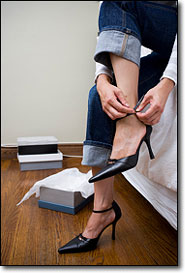
Clothing in Psychotherapy can make a difference
Therapists’ clothing may also vary according to their therapeutic modality. Traditional psychoanalysts, for example, have a commitment to reduce variability, which may mean that they are likely to use neutral, conservative, and consistent clothing for sessions. Feminist and humanistic psychotherapists have a commitment to breaking interpersonal boundaries, which is likely to manifest itself in the wearing of casual and unique clothing.
Concerns with clothing can arise in regard to clients or therapists wearing inappropriate or sexually suggestive clothing. Whether worn by therapist or client, it is likely to be a boundary violation because it tends to sexualize the therapeutic relationship. Overly casual clothing that is not suitable to the setting or climate or is culturally insensitive can also be viewed as inappropriate, although not necessarily a boundary violation. Among Hindus, orthodox Jews, Muslims, and others, offense may be given when women wear clothing that reveals more than the face, hands, and feet, although such clothing is perfectly acceptable in Western and other cultures or in tropical regions. Clothing includes jewelry and printed T-shirts. Swastika pendants or offensive slogans or sayings on T-shirts can also be boundary violations. Displays of highly expensive jewelry or clothing can promote closeness or distance depending on the socioeconomic status of the clients or their sociopolitical values. As with language or nonverbal cues, clothing that is acceptable and appropriate to one person may promote connection or, conversely, be unacceptable and even offensive to others, creating a barrier. Therapists should be aware and thoughtful about the message they give by the way they dress and also should discuss with clients when clients’ dress seems offensive or inappropriate.
One of the questions that seem to surprise most therapists is “Is it even ethical to have both therapist and client naked in the same space and close proximity?” The answer seems to be obvious for small town therapists. They are fully aware that they can come out of the shower in the locker room in the only gym in town and face a former, current, or future client.