A newer version of the platform is available. Please refresh the page.
Sign Up to Get information about Sales & Events Click Here

A newer version of the platform is available. Please refresh the page.
The material is copyrighted and reprinted with permission by Massachusetts Citizens for Children – Kids Count.
The following material is available in its comprehensive format at:
https://www.masskids.org/
Introduction
Justice, dignity, equality – these are words which are often used loosely, with little appreciation of their meaning. I think that their meaning can be distilled into one goal: that every child in this country live as we would want our own children to live.
B>Robert F. Kennedy New York, 1965[1]
Despite nearly three decades of legislatively mandated child protection services in Massachusetts and across the country, the number of children reported and confirmed as victims of abuse and neglect each year remains alarmingly high. From 1986 to 1997, the number of abused and neglected children jumped nationwide from 1.4 million to 3 million. This increase reflected a rise more than eight times faster than the increase in the children’s population (114.3 percent compared to 13.9 percent).[2]
The U.S. Advisory Board on Child Abuse and Neglect now estimates the number of child deaths at 2,000 each year – more than five deaths a day. [3] Child abuse is the leading cause of death in children under age 1, while children younger than 4 years of age account for over 75 percent of child abuse and neglect deaths.[4]
In Massachusetts over 60,000 reports of child abuse and neglect were filed in 1998, representing nearly 100,000 children. That year, 13 children who were known to the state child protection agency died – 8 from neglect, 2 from abuse, and 3 from both abuse and neglect.[5] This number does not include other children that died as a result of abuse or neglect but were not previously referred to child protective services. Particularly sobering is the fact that while child maltreatment has been steadily growing in the Commonwealth over the past decade, other crimes of violence have shown a steady and dramatic decrease.
The links between maltreatment and poor outcomes indicate that public health rather than criminal justice responses offer the most effective ways to reduce physical and psychological morbidity in our youngest citizens and in the U.S. population at large. Neighborhood-based family supports are among the most effective ways to reduce child abuse and neglect. The success of these family supports, however, is fundamentally linked to improvements in state child protection systems and to comprehensive efforts to prevent and treat child abuse.
A recent response to the persistently high incidence of child abuse and neglect nationally has been the National Call To Action to End Child Maltreatment, initiated by Children’s Hospital and Health Center-San Diego at its January 1999 “Conference on Responding to Child Maltreatment.” This effort to end child abuse and neglect has now brought together over 30 of the country’s leading organizations in a coalition to address this national crisis.
With the release of our report, Massachusetts Citizens for Children (MCC) launches the first, parallel State Call To Action aimed at ending child maltreatment. Through our recommendations and the mobilization of citizens to support them, we will work to achieve three fundamental long-term objectives articulated by the National Call:
Summit Initiative on Child Protection and Family Support
The essential groundwork for these changes has been laid through the efforts of over 200 child and family policy leaders across Massachusetts who have participated with MCC in the “Summit Initiative on Child Protection and Family Support.” (See Appendices A and B.) The initiative was launched by MCC in May 1999 with an intensive two-day meeting involving fifty policy leaders from Massachusetts and a dozen child protection and family support experts from across the country. It was followed by five active Working Groups that met regularly over six months beginning in January 2000 to focus on specific aspects of the current system.
In the spring of 2000 three daylong Symposia were held to discuss and develop recommendations to address the implications of child trauma on brain development, behavior, and school performance. Finally, meetings and consultations with leading national and state experts helped shape other critical recommendations. Throughout this period, Massachusetts leaders explored successful practices, debated strategies, and worked together to achieve a consensus agenda for change and improvements.
The Public’s View
Recommendations of the State Call To Action are part of a comprehensive and evidence-based proposal for systemic reform – reform that is strongly supported by the public.
In a 1998 poll commissioned by MCC and its program, Prevent Child Abuse Massachusetts, 46% of the 400 citizens surveyed identified “safety from abuse, neglect, and violence” as the most important element necessary to child well-being. Health care was second with 17%, followed by freedom from poverty (9%), education (9%), and childcare (4%).[6]
A subsequent survey conducted for MCC by the University of Massachusetts Poll in the spring of 2000 supported previous findings:[7]
In responding to their view of how our state is currently addressing these issues:
Results of a survey of voters conducted in 2000 by the Stride Rite Foundation to measure the public’s support for early childhood education also reinforced the UMass results. In addition to documenting support for this critical educational goal, 54 percent of voters identified the need to reduce violence against women and children.[8]
Conclusion
The Summit Initiative on Child Protection and Family Support has crafted a consensus agenda among key professionals in child welfare, health, mental health, and law enforcement. As our discussions confirmed, the systems involved in preventing child abuse and in protecting and healing victimized children are complex. Multiple strategies, both short and long term, will be required to implement proposed solutions. Working together, however, we believe a strong, bi-partisan political will can be forged – one that will ensure today’s children and generations to come a safe childhood and a future filled with hope.
In the months ahead, Massachusetts Citizens for Children will continue to bring together leaders and advocates to further refine the State Call To Action. We will work to educate, build, and mobilize the constituency for children by involving citizens, legislators, front-line workers, state officials, local faith leaders, the business community, and, importantly, those personally affected by child abuse and neglect. MCC will remain committed to providing leadership for the broad-based effort to end child maltreatment in Massachusetts until that vision is realized.
Jetta Bernier, Executive Director
Nora Sjoblom Sanchez, Esq.
April 2001
CHAPTER 1 Incidence and Prevalence
Over the ten-year period from 1987 to 1997, Massachusetts saw a 98 percent increase in the number of children reported for abuse or neglect. This is in contrast to an increase of 54 percent nationally during the same period. Based on Massachusetts’ child population of 1.5 million[9] in 1997 and the number of reported children that year, we see that roughly 46 of every 1,000 children was involved in a child abuse report. [10]
Although child abuse statistics for 1998 showed a reduction of 2,000 reports from the previous year, state officials believe the transition into new data systems may have accounted for the slight decrease. Recently released 1999 statistics confirm a persistent and ever worsening problem, even while the state’s violent crime rate decreased 21 percent from 1993 to 1998.[11]
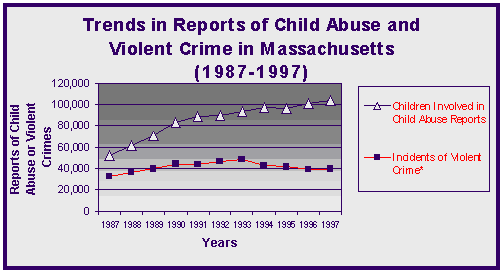
* Incidents of Violent Crime include murder, rape, robbery, and aggravated assaultSource: DSS Child Maltreatment Statistics (1997), FBI Crime Index for Massachusetts (2000)
National reporting figures provide some picture of how many children are identified as abused each year, an estimated 3.1 million reported in 1998,[12] but they do not indicate the cumulative total of children who are maltreated at some time during their childhoods. Attempting to estimate the total prevalence rate from the yearly incidence figures is confounded by a number of factors, including differences in the incidence of abuse among different age and socio-economic groups, and the likelihood that victims of long-term abuse are identified repeatedly through child abuse reporting.[13]
Underreporting is also a significant factor that prevents accurate quantification of the prevalence of child abuse. For example, one study indicates that 84 percent of children who are sexually abused never report the abuse.[14]
The “Adverse Childhood Experiences Study”[15] recently completed by Dr. Vincent Felitti of Kaiser Permanente and several noted research groups including, the U.S. Centers for Disease Control and Prevention and the National Center for Chronic Disease Prevention and Health Promotion, gives us a startling picture of the pervasiveness of child abuse.
A questionnaire was mailed to over 13,000 adults who had completed a standardized medical evaluation at Kaiser Permanente, a large HMO. Over 70 percent responded to inquiries about seven categories of adverse childhood experiences including: living with household members who were substance abusers, witnessing violence, or experiencing physical, emotional, or sexual abuse as a child. While substance abuse in the household was the most prevalent exposure of the seven categories described, more than half of the respondents experienced more than one or equal to four categories of abuse.
Who Are These Children?
Boys and girls are neglected, physically abused, and emotionally maltreated in approximately equal numbers.[16] Reports of sexual abuse generally involve girls. The lower reporting rate for boys is thought to be a result of less disclosure. The recent organizing of support groups among adult men who were child victims of sexual abuse makes it clear that underreporting is a main factor, particularly underreporting of sexual abuse of boys by their mothers and other female caretakers.[17]
Children from every city and town in Massachusetts and from every social and economic group are suffering from abuse or neglect. Some communities, however, have higher reporting rates accompanied by similar high rates of domestic violence, poverty, homelessness, and substance abuse.
The following are cities and towns with the highest and lowest reporting rates in 1997.[18] The rate is based on the number of reported children per 1,000 resident children under the age of eighteen and includes only those cities or towns in Massachusetts that had 275 or more children in residence who were reported for maltreatment. (For the reporting rates of other Massachusetts cities and towns, see Appendix C.) 12 Cities/Townswith the Highest Number of Children Reported1997HolyokePittsfield Greenfield Chelsea North Adams Fall River Lynn New Bedford Brockton Chicopee Lawrence Fitchburg12 Cities/Towns with the Lowest Number of Children Reported1997 Waltham Medford Weymouth Methuen Woburn Leominster Peabody Cambridge Attleboro Marlborough Quincy Plymouth
Neglect was the most common type of maltreatment in Massachusetts in 1997, totaling about 68% of substantiated cases, followed by physical abuse at 24%. Cases involving emotional maltreatment as the prime concern comprised 2% of the cases. Substantiated sexual abuse cases (6%) in Massachusetts were less than half the national average (15%)[19] but still represented far too many violated children.[20]
The following represents substantiated cases in Massachusetts in 1997: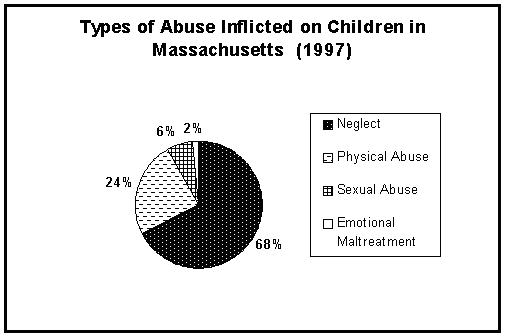
Source: DSS Child Maltreatment Statistics (1997)
Neglect
In 1997, almost 70% of reports to child protective services in Massachusetts were because of neglect or deprivation of necessities.
Child neglect is a complex and multi-faceted type of maltreatment. It can be fatal or it can slowly and almost invisibly undermine a child’s cognitive and psychological development until the child has little ability to bond with others.[21] Sometimes neglect is defined as the failure of a parent or caretaker to provide a child with needed care and protection, e.g. proper food, clothing, shelter, or supervision. Other definitions focus on the condition of the child, regardless of the specific cause or intent of the parent or caretaker. For example, educational neglect affects children who are truant chronically, oftentimes because of a need to care for younger siblings or because of the emotional or substance abuse problems their parents face.
The impact of neglect can be devastating, particularly since it affects disproportionately infants and preschoolers who are at their most vulnerable developmental stage. The short-term effect is often the increased exposure of children to dangerous or life-threatening conditions. Some infants are “failure to thrive” victims, their physical and developmental growth arrested, sometimes fatally. Irreversible brain damage can be caused by lack of parental affection and stimulation in the first years of life. Studies have concluded that 40 percent of child fatalities due to child maltreatment are the result of neglect.[22]
A review of recent studies by the National Center on Child Abuse Prevention Research at Prevent Child Abuse America confirms that the long-term effects of neglect can result in serious and lasting cognitive and emotion harm to children of a young age, and an increased rate of delinquency, drug and alcohol abuse, and teenage pregnancy as they grow older.[23]
Physical Abuse
One-quarter of the children reported to DSS are victims of physical abuse. Physical abuse can include a range of injuries including: bruises and welts from being hit with hands, fists, or objects such as straps, wooden boards, wire hangers. Broken bones and fractures, organ damage from being punched, kicked or thrown, and burns from cigarettes, irons, and from immersion in scalding water, constitute the types of abuse that can cause serious or fatal injury.
Brain injury is reported in nearly 44 percent of all cases of reported physical abuse. According to the American Academy of Pediatrics Committee on Child Abuse and Neglect, child abuse is the source of 95 percent of serious head injuries in infants less than 1 year of age, and accounts for up to 80 percent of deaths from head traumas in infants less than 2 years of age.[24]
A major form of physical violence contributing to brain injury among infants and young children is Shaken Baby (or Infant) Syndrome (SBS). Children under two can easily be injured from shaking because their weak neck muscles are not yet strong enough to fully control their head movements. When a child is shaken, the head whips back and forth slamming the fragile brain tissue against the hard skull, causing bruising, bleeding, and swelling inside the brain. When the shaking is combined with throwing an infant or child against a mattress or hard surface, the instant deceleration applies more force to the brain and more damage can occur.
In addition to brain and retinal injuries associated with SBS, a Philadelphia study conducted by prominent researchers Duhaime, Gennarelli, and Thibault documented frequent skull fractures among fatal cases of infant abuse, suggesting that these children are also struck with objects or thrown against them with significant force.[25] As a result, Duhaime and colleagues have suggested referring to this syndrome as Shaken Impact Syndrome.
Depending on the age of the child and how severe the shaking or impact, injuries can include: learning disabilities, delays in development, speech problems, impaired use of arms and legs, brain damage and seizures, hearing loss, partial or total blindness, spinal injury, paralysis, and mental retardation. According to Dr. Jacy Showers, a prominent expert in the field, it is estimated that up to one-third of children who are victims of SBS die from their injuries while 50 percent sustain severe lifelong neurological problems.[26]
Sexual Abuse
Sexual abuse of a child is defined as inappropriately subjecting or exposing a child to sexual contact, activity, or behavior. Non-touching sexual offenses include indecent exposure or exhibitionism, exposing children to pornographic material, deliberately exposing a child to the act of sexual intercourse and/or masturbation in front of a child. Touching offenses include sexual fondling, making a child touch an adult’s sexual organs, forcing a child to engage in sexual intercourse or activity. Sexual exploitation of children can include engaging a child for the purposes of prostitution or using a child to film or model pornography.
Nationwide, reports of child sexual abuse declined from an estimated 425,000 in 1991 to an estimated 223,000 in 1997.[27] In considering any declines, it is important to remember that only a subset of child sexual abuse cases are actually identified or reported to child protective services each year.[28] Researchers estimate that as many as 85 percent of child sexual abuse cases are never reported to authorities.
Retrospective surveys are now supporting the estimate that at least 20 percent, and possibly higher, of all American women and 5 percent to 16 percent of American men experience some form of sexual abuse as children.[29] If the number of sexually abused children today is as great as the number of adults who claim to have been child victims, we can then conclude that less than one-third of sexually abused children are being currently identified and reported.
Declines in reports may be completely or partly due to factors that are not related to the actual incidence of sexual abuse. For example, “child abuse backlash” reported by some researchers may play a role.[30] The dominant and incorrect message to the public has often been that false allegations are frequent and that innocent people are unfairly stigmatized. As a result, media coverage of child sexual abuse cases may be fueling a more skeptical attitude toward the problem than in the past and causing the public and professionals to be more reluctant to report such cases. Legislative initiatives to increase the rights of alleged perpetrators have also taken hold in certain states and, as a result, victims may be more reluctant to seek help.
A number of other factors may account for the decrease in investigations and substantiation of cases after they are reported.[31] For example:
A review of national incidence studies by researcher David Finkelhor found that girls are sexually abused three times more often than boys.[32] Despite the public’s perception that highly publicized cases of sexual assaults by teachers, clergymen and other unrelated adults are the norm, they make up less than 10 percent of sexual assaults against children. According to child abuse researchers, in 90 percent of child sexual abuse cases, the child knows and trusts the person who commits the abuse. Most sexual abusers are fathers, mothers, stepparents, grandparents and other family members or adults who have close contact with the child.[33]
Sexual abuse exists in low, middle, and high-income families across the state. There are no markers to help us identify when sexual abuse is more likely to occur. However, some studies show that the most important indicator of risk for sexual abuse is the compromised ability of a parent to provide adequate supervision to their child, e.g. marital conflicts, unavailability, substance abuse. The factors that reduce appropriate parental supervision can also produce emotionally vulnerable children who in turn can fall prey more easily to sexual abusers offering affection, attention, and friendship.[34]
The effects of sexual abuse on children can be devastating and long-term, especially when timely and effective treatment is not available. A variety of studies show that sexually abused children can experience a chronic self-perception of helplessness, hopelessness, depression, impaired trust, self-blame, self-destructive behavior, and low self-esteem.[35] Anger and emotional distress are also cited, as well as alcohol and drug dependency when the child reaches adolescence or adulthood.[36]
Emotional Abuse
In 1997, emotional maltreatment was the presenting problem in 2 percent of the reports made to DSS. While clinical descriptions of child abuse and neglect suggest psychological harm from other forms of maltreatment, practitioners and researchers still struggle to clearly define the nature and consequences of emotional abuse.
A study conducted by noted researchers Garbarino, Guttman, and Seeley in 1987 suggests a pattern of psychologically destructive behavior that constitutes a concerted attack on the child’s development of self and social competence.[37] Included are behaviors that reject, isolate, terrorize, ignore, and corrupt the normal development of the child.
Consequences for child victims are devastating. Infants can show non-organic failure to thrive, anxiety, and inadequate social responses. Older children can show signs of feeling unloved, inferior, and negative in their view of the world and themselves. They may show symptoms of fear, anxiety, and aggression. Internalized, these feelings may provoke self-destructive, depressed, withdrawn or even suicidal behavior. Externalized, they can lead to aggressive, impulsive, and violent behaviors.
Emotional maltreatment of children remains one of the least reported and potentially devastating forms of abuse.[138]
CHAPTER 2 Impact of Abuse and Neglect on Child Development
For some children, the effects of abuse, neglect, and witnessing violence can be buffered by close personal relationships they form with trusted adults. Social supports can even help them recover from such traumatic events, particularly when current attachments to safety figures outweigh the terrors of the past, according to trauma researcher Dr. Bessel van der Kolk.[39]
For too many children, however, these experiences result in scars that, if not indelible, are exceedingly difficult to erase. This is particularly true when abuse, neglect, or trauma from violence occurs by age three.[40] Experts say that traumatic early experiences can cause a normal child to become developmentally delayed or develop serious emotional problems. Research has established that early childhood trauma has a profound impact on the emotional, behavioral, cognitive, social, and physical functioning of children.[41]
A 1995 Baylor University study found that children who were rarely touched or spoken to and who were not allowed to explore and experiment with toys developed brains that were 20 to 30 percent smaller than normal for children their age.[42] The study conducted by Dr. Bruce Perry also found that, “multiply abused infants and toddlers often experience developmental delays across a broad spectrum, including cognitive, language, motor, and socialization skills.”[43]
In a sample of sexually abused children,[44] victimized children were found to display the following symptoms and behaviors:
Other symptoms, such as eating disorders, have also been found to relate to child physical and/or sexual abuse.[45] In addition, maltreated children have been found to develop a variety of psychiatric conditions, including Attention Deficit and Hyperactive Disorder (ADHD), Oppositional Defiant Disorder, Conduct Disorder, Separation Anxiety/Overanxious, Phobias, and Posttraumatic Stress Disorder (PTSD).[46]
Impact of Abuse and Neglect on Early Brain Development
The human brain is not fully developed at birth and represents only 25 percent of its approximate weight at adulthood. It depends upon individual experiences to guide its growth and development. Experiences and sensory inputs organize the brain’s patterns of communication between neurons and determine how we think, feel, and behave.[47]
As the brain develops, it begins to organize and eliminate unnecessary, rarely used neural connections.[48] Connections that are used repeatedly during the early years of a child’s life become the life-long foundation of the brain’s organization and function.[49] By three years old, a child’s brain has reached approximately 90 percent of its full potential. To reach this optimal stage, the brain requires good health and nutrition, as well as a great deal of stimulation and support.[50]
Thus, a loving, secure, stimulating environment fosters healthy development, while a continually neglectful, physically or emotionally abusive environment can create significant, long-term harm.[51] The quality of a child’s earliest experiences, including the quality of infant and toddler childcare, plays a crucial role in the overall development of the brain.[52]
Early trauma alters the development of the brain. Failure to properly nourish a child, inflicting physical pain and injury or simply ignoring the emotional needs of a small child can cause trauma. Damage can be significantly more detrimental than other diseases that affect the brain and can often be corrected through drugs or surgery. Influencing the way the brain functions in repeatedly harmful ways can result in permanent and irreversible injury.[53,54]
The neural connections established during the early years of life respond to certain patterns. Traumatic experiences, for example, when a child endures physical or sexual abuse, or witnesses violence, can increase the production of cortisol, a brain hormone that can lead to a destruction of neurons and a reduction in synapse formation, thus altering brain function. Chemical levels in the brain and blood play a role in determining how a person will respond to challenges in the environment. When a child lives in constant fear or has experienced trauma, they live in a state of chronic stress. Research has found that children with chronically high levels of cortisol demonstrate more cognitive, motor, and social delays than other children.[55]
Serotonin and noradrenaline also play significant roles in brain function. Serotonin modulates emotions, including aggression, while noradrenaline regulates responses to fear and anger. Under normal circumstances, these hormones work harmoniously. However, traumatic events and/or chronic stresses can alter levels of these hormones, resulting in a variety of emotional, behavioral, and cognitive problems.
Children who are physically abused in early life develop brains that are highly attuned to aggression and danger. It has been found that, “early, frequent, and intense stress tunes the brain to set stress regulation mechanisms at high levels.”[56] As a result, the child often lives life in a perpetual state of fear. A child of this type may behave more aggressively to environmental stress and may have difficulty controlling his or her aggressive actions.
Similar to adult veterans of war, children exposed to trauma may experience symptoms of Posttraumatic Stress Disorder (PTSD). PTSD is a syndrome that occurs in response to a highly distressing event. After the occurrence of a traumatic event, the child frequently re-experiences the event through nightmares or intrusive thoughts. As a result of the stress on the child, symptoms such as jumpiness, sleep disturbance, and poor concentration undermine his or her stability.
Immediate and Long Term Behavioral Effects of Abuse and Neglect
Several immediate responses to child abuse trauma have been identified in children. Many show difficulty remaining calm when faced with emotional challenges, and develop what are termed “arousal disorders.” Others have the tendency to overreact or freeze in uncomfortable situations. Children may also experience attention difficulties that make it hard to focus on and complete tasks.[57] Other physiological responses include increased heart rate, temperature, and blood pressure. Many children also continuously scan their environment for danger and over-interpret the actions of others.[58]
Traumatic experiences in childhood increase the risk of developing future psychiatric symptoms in adolescence and adulthood.[59] Depending on the frequency, nature, severity, and pattern of traumatic experiences, at least half of all exposed children are at risk of developing considerable neuropsychiatric conditions.[60] Most researchers agree that the difficulties of abused and neglected children intensify over time, particularly when abuse is longstanding and no formal intervention occurs.[61]
Some of the long-term problems experienced by children who have been traumatized include difficulties forming and maintaining stable relationships with others, as well as problems meeting their own personal needs. Affected brain development, especially at an early age, can have long-term effects on cognition, the regulation of emotions, and social interactions. Problems that abused and neglected children face as they grow into adulthood can include:
The “Adverse Childhood Experiences Study” described in Chapter 1 has also documented the link between abuse in childhood and risk factors for adult disease. The U.S. Centers for Disease Control and Prevention, joined by other leading health researchers, confirm: there is a significant graded relationship between the extent of exposure to emotional, physical, sexual abuse and household dysfunction during childhood and multiple risk factors for the leading causes of deaths in adults -including, ischemic heart disease, cancer, chronic lung disease and liver disease. [62]
A study completed in 1983, following up on 97 boys who in 1943 had been abused and neglected, found that 45 percent had become criminals, alcoholics, mentally ill, or had died before the age of 35.[63] According to researcher Widom, being abused and neglected as a child can increase the likelihood of arrest as a juvenile by 53 percent, and arrest as an adult for violent crime by 38 percent.[64]
Most tragically, if the cycle of violence is not interrupted, child abuse and family violence can be perpetuated for generations. Parents that abuse their own children, and the victims and perpetrators of other forms of domestic violence, are frequently survivors of maltreatment in their own childhoods.[65]
Trauma and Learning
Maltreated children have greater behavioral problems and perform significantly worse in school, according to a study by Dr. van der Kolk:
Significant differences in academic performance are also found between maltreated and non-maltreated groups of children.[67] The constant threats experienced by an abused child can result in the child being fearful and over-vigilant, even in situations that present no risks. Concentrating on the emotional and physical cues of other people, including teachers, the abused child may have difficulty taking in academic information and may fail to develop appropriate problem-solving and language skills. In one study, the cortex, or thinking part of the brain, was 20 percent smaller on average in abused children than in those children who had not been victimized.[68]
Resiliency and Early Intervention
Resiliency can be defined as “strength under adversity.” It is the capacity to withstand the effects of adverse conditions. According to childhood trauma expert Mark Katz, PhD, “There is a myth that children are resilient. If anything, we now know that children are more vulnerable to trauma than adults.”
The brain’s agility provides potential for positive experiences to lessen the damage of trauma.[69] These protective influences can be found in families, communities and schools, but too often they are lacking.[70] For example, it is not uncommon to hear of children who are berated or punished in school for poor concentration and aggressive behavior that are themselves the results of previous trauma and violence. In such instances, the school fails to be a supportive environment and a protective influence, and becomes yet another traumatizing influence on already vulnerable children.
It is important to note that resiliency decreases, as children get older. Increased exposure to risk and the severity of risk also decreases resiliency. This demonstrates the critical need for early intervention in the lives of abused or neglected children in order to minimize these damaging effects.