A newer version of the platform is available. Please refresh the page.
Sign Up to Get information about Sales & Events Click Here

A newer version of the platform is available. Please refresh the page.
Retrieved from http://www.cdc.gov/hiv/topics/aa/index.htm

Among diseases that disproportionately affect African Americans, HIV/AIDS has had a particularly devastating effect. At every stage―from HIV diagnosis through the death of persons with AIDS―the hardest-hit racial or ethnic group is African Americans. Overall, even though African Americans make up only approximately 13% of the US population, one half of the estimated new numbers of HIV/AIDS diagnoses in the United States in 2004 were for African Americans [1].*
Race/ethnicity of adults and adolescents with HIV/AIDS diagnosed in 2004 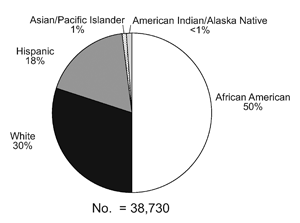
Note. Based on data from 35 areas with long-term, confidential, name-based HIV reporting.
AIDS has become a leading cause of death for African Americans. In 2002 (the most recent year for which data are available), HIV/AIDS was the second leading cause of death for all African Americans aged 35–44 [2]. In the same year, HIV/AIDS was the number 1 cause of death for African American women aged 25–34 [2].
The cumulative toll (from the beginning of the epidemic through 2004) of AIDS is sobering.
|
In 2002, HIV/AIDS was the number 1 cause of death for African American women aged 25-34. |
It is not an exaggeration to say that HIV/AIDS is an epidemic in the African American community.
Quick Facts:
* The estimated number of new HIV/AIDS diagnoses is derived from 35 areas with long-term, confidential name-based HIV reporting. The 35 areas include the US Virgin Islands, Guam, and 33 states: Alabama, Alaska, Arizona, Arkansas, Colorado, Florida, Idaho, Indiana, Iowa, Kansas, Louisiana, Michigan, Minnesota, Mississippi, Missouri, Nebraska, Nevada, New Jersey, New York, New Mexico, North Carolina, North Dakota, Ohio, Oklahoma, South Carolina, South Dakota, Tennessee, Texas, Utah, Virginia, West Virginia, Wisconsin, and Wyoming.