A newer version of the platform is available. Please refresh the page.
Sign Up to Get information about Sales & Events Click Here

A newer version of the platform is available. Please refresh the page.
By Lenore E. A. Walker, Ed.D.
Source & Permission: Chapter 8 from Lenore e. A. Walker. (2000). The Battered Woman Syndrome, 2nd Ed., New York: Springer, Pub. Posted with permission of Springer Pub. Access to this page is limited only to those who have registered and paid for the online course on Domestic Violence through the Zur Institute’s online offerings.
Personality Characteristics and the Battered Woman Syndrome
The limited psychological literature that existed prior to this research study attempted to measure the intrapsychic personality characteristics of battered women, looking for signs of mental illness. Women who remained in violent relationships were thought to have serious pathology that included a masochistic need to be hurt and punished. The Snell, Rosenwald and Robey (1964) study is typical of the reports that were in the psychology literature. Based on their interviews, Snell and his colleagues concluded that wifebeater’s wives were frigid and had other personality characteristics that made them undesirable as wives. The implication that these authors give is that “good” wives don’t get beaten and those who are abused must have flaws in their personalities-in other words, “they deserve it”! This attitude of mental health professionals still exists today amongst those who are uneducated about the problems that face battered women. Although we were the first empirical study to demonstrate that the cluster of symptoms seen in battered women was a syndrome that came from the abuse rather than a cause of it, most subsequent research have supported our findings.
DO BATTERED WOMEN HAVE A PERSONALITY DISORDER?
The search for personality characteristics that identify battered women continued until this research was originally published and then, it began to wane. Starr (1978) looked for a cluster of symptoms using popular personality test measures with battered women. Shainess (1979, 1985) attempted to apply a feminist perspective to a psychoanalytic interpretation of personality dynamics in battered women. She was unable to do so without contradiction, which left her needing to defend the psychoanalytic concept of masochism, a totally unacceptable concept in feminist theory. At one point she tried to equate masochism with learned helplessness, which is not accurate. Others have used psychoanalytic frameworks together with a family therapy approach. Even more interesting are those who make equally unsuccessful attempts to use the behavioral construct of learned helplessness as a bridge between other theoretical perspectives. Usually this is because they define learned helplessness literally, without any relationship to the meanings ascribed by the theoretical underpinnings.
THE DSM-III-R BATTLE WITH THE PSYCHIATRISTS
Interestingly, the construct of masochism did not go away during these past 15 years despite the lack of data to support it. Rather, the psychiatrists who create the categories for the Diagnostic and Statistical Manual of Mental Disorders (DSM) attempted to bring it back as a new category to be called, masochistic personality disorder at first and then in response to criticism, changed it to self-defeating personality disorder. It was to be listed under the section of Personality Disorders in the DSM-III-R, an unscheduled revision of the DSM system that was published in 1986. Until 1985, the DSM was published every 12 years to correspond to the publication of the International Classification of Diseases (ICD). The next edition, to be a companion volume to the ICD-10 was due to be published in the early 1990s. The DSM-III was a new system of categorization that attempted to make diagnosis more reliable although it added about 400 pages of diagnoses and their criteria from the older, DSM-II. Many mental health professionals from a variety of disciplines were asked to participate in the development of the DSM-III so it came as a great surprise when the same group were not asked to collaborate with this revision. Fortunately, the psychiatrists’ Committee for Women in Psychiatry found out about the plan and contacted the psychologists’ Committee for Women in Psychology that was meeting in Washington, D.C. at the same time, and strong protests were made resulting in the proposed masochistic personality disorder category being included in the Appendix as a category requiring further study with the name-change to self-defeating personality disorder. The subsequent research did not support that such a distinct personality disorder existed so in 1994, the controversial category was dropped from the DSM-IV. None-the-less, the arguments among women psychiatrists and men and women psychologists exposed the lack of validity criteria for many of the newer diagnoses contained within the DSM nosology system even though there was reliability for some categories and calls for reforms were sounded. As Caplan (1995), Kutchins and Kirk (1997), and Lerman (1996) make clear, these reforms have not yet occurred and the entire diagnostic system has been held up to ridicule in the popular press.
PSYCHOLOGICAL ASSESSMENT OF PERSONALITY
Rosewater’s (1982, 1985a, 1985b) research on Minnesota Multiphasic Personality Inventory (MMPI) profiles for over 100 battered women was a turning-point that helped measure and explain some of the initial misdiagnoses. Rosewater found that her sample appeared to have profiles that were similar to other emotionally disturbed women, particularly those with schizophrenia and borderline diagnoses. But when using a subscale analysis, inconsistencies were found that could differentiate battered women from the others. Rosewater concluded that it would be quite easy to misdiagnose battered women as having a serious mental illness if cautions weren’t taken to account for the influence of having to cope with battering. For example, it is reasonable for a battered woman to believe she has been betrayed and that someone is out to get her without it being indicative of paranoid ideation. And, it is common for battered women to become cognitively confused without having psychotic ideation.
The analysis of personality from the Rorschach test using the Exner scoring and interpretation helps describe how the battered woman sees her personal world. The test draws upon the unique and common perceptions that individuals give to very ambiguous stimuli, inkblots. Using statistical frequencies together with personality theory, the Exner system makes some predictions of an individual’s ability to organize their world while under stress or in less demanding situations. It is particularly useful in helping to understand those battered women who are unable to deal directly with their abusive environment.
Millon (1991) developed a test that specifically assesses for personality disorders based on the theoretical perspectives that suggest that they are infrequently found in the population, usually under 7%, pervasive across all areas of the person’s functioning, and very stable and resistant to treatment. Obviously, the difference between a psychological symptom that could also be observed as a coping strategy when living in terror of further abuse and that is easily ameliorated by changing the situation and helping the woman find safety, does not meet this definition of personality disorder. Furthermore, the lack of either reliability or validity in differentiating all categories of personality disorders and the sexist bias that underlies the criteria used, all contribute to the admonition for psychologists not to give a battered woman a personality disorder diagnosis until after the person has been in therapy for a minimum of 6 months (Walker, 1994).
Herman’s (1992) formulation of a complex post traumatic stress disorder diagnosis that occurs in many female trauma victims further explains the inherent problems in looking for a personality theory to explain battered women’s psychological functioning. She found that many trauma victims, particularly those who have experienced multiple forms of trauma beginning in childhood, develop a complex form of PTSD that is directly related to the experiences and not personality. When their situation becomes safe, many of the so-called personality traits drop out spontaneously or respond to therapy unlike personality disorders. Barnett and LaViolette (1993) use behavioral constructs that also are more consistent with the clinical and research data on battered women while Hansen and Harway (1993) add a feminist family therapy approach.
MEASURING BATTERED WOMEN’S PERSONALITIES IN THE STUDY
The Battered Woman Syndrome Study approached the notion of personality characteristics from two perspectives. First, we wanted to measure those characteristics commonly associated with mental illness to look at the frequency with which they appear in currently and previously battered women. While we understood that cause and effect could not be gleaned from these data, some information could be gained concerning the role of personality characteristics for the battered women studied. Second, using a social learning theory analysis, it was expected that environmental forces would impact on an individual’s personality, which would create certain predictable behavioral, cognitive, and emotional responses. Measuring personality variables from these perspectives lent clarity to what it is like for a woman to experience repeated violence.
Although at the beginning of the research it seemed obvious that all battered women couldn’t be the same personality types, it seemed important to look at each woman’s history for commonalties. It was suggested that both modeling of previously learned aggressive behavior and responses (Bandura, 1973), as well as rigid traditional sex role stereotypes (Walker, 1979), would create a greater potential or vulnerability for a man or woman to remain in a battering relationship. Actually entering into such a relationship was thought to be accidental, especially since the Straus et al. (1980) epidemiological study found such abuse to be tolerated by most people and actually present at least once during the year for 28% of their sample. Whether or not living with violence irreversibly changes a person’s personality has not been measured, since we would need a large-scale epidemiological study to follow women across a life cycle to do so. However, different patterns emerge when women are measured across the life span, each occupying a different place in relation to the time of their battering.
ATTITUDES TOWARD WOMEN SCALE (AWS)
To measure the level of traditionality of the woman’s own attitudes toward the role of women as well as her perception of the attitudes of significant other people in her environment, the Attitudes Toward Women Scale (AWS) was administered at four different times during the interview.The woman’s AWS score is reported twice. She was administered the original 55-item (Spence & Helmreich, 1972) which was first scored, and then rescored for the 25 items in the shortened version (Spence, Helmreich & Stapp, 1973). This permitted ease of comparison, with the scores on the shortened version representing her perception of her mother, father, batterer and nonbatterer’s sex role attitudes. The sample size varies, as some of the subjects did not complete all of the scales.
The 25 items selected for the shortened version of the original Likert-type scale are highly correlated with the full test (Spence et al., 1973). The scores presumably reflect the degree to which an individual holds traditional or liberal views about women’s roles. The higher the score, the more liberal the views. The normative sample consisted of college men, women, their fathers and their mothers.
It is interesting to note that, in our sample, the reported mothers’ mean of 40.16 is about the same as college students’ mothers’ reported means of 41.86. The reported father’s AWS score of 27.06 is considerably more traditional than the college students’ fathers’ reported mean score of 39.22. Thus, the attitudes toward the role of women were either different in the battered women’s childhood homes than in those where the normative sample grew up, or they learned to think about gender roles differently (Caplan & Caplan, 1994).
As our sample of batterers and nonbatterers have a greater age span than either college males or their fathers, their AWS scores are more difficult to compare. Nonetheless, the nonbatterer’s mean of 42.88 is about midway between the college student’s 44.80 and father’s 39.22, which could logically reflect the age differences. The batterer’s score of 25.67 is sharply below the others. Both the batterer and the woman’s father are perceived as being much more traditional toward women’s roles than the woman’s mother, the nonbatterer, or herself. Significance tests were not computed due to the difficulty in comparing the normative sample with our sample’s heterogeneous age and educational level and the fact that these are the battered woman’s perceptions, not the actual scores from each person.
The battered woman’s mean score of 58.48 is higher than college females’ mean score of 50.26 or mothers’ mean score of 41.86. We originally predicted that these women would score at a more traditional level given their often subservient behavior toward their abusive partners. Also, given our sample’s age range, it would be expected that they would score somewhere midway between those two groups. Instead, the battered women view themselves as more liberal in their sex role views than the other groups. Using the original 55-item norms, our subjects’ mean score of 118.24 is more liberal than 81% of the normative group. This is a surprising finding, as it was predicted that battered women would perceive themselves as having more traditional attitudes toward women’s roles. The prediction that she would view the batterer and her father as holding traditional views, however, was supported.
LOCUS OF CONTROL
Attribution style is a concept from social psychology where people are believed to have consistent ways to view what happened to them. These beliefs can be categorized into “internal” and “external” types. Those who are more “internal” believe that they have control over their lives-it is their abilities and competence or lack of it that results in what happens in their lives. Those who are more “external” believe that other people and situations are more likely to control what happens in their lives. Attribution theory suggests that whatever style the person has, it is pretty stable over time and across situations.
As a part of the standardized tests administered at the end of the interview, each subject was asked to complete Levenson’s (1972) locus of control scale to measure her attribution style. This scale was preferred over the more common Rotter’s (1966) I-E scale. Levenson’s items are written to apply personally to each subject (i.e., whereas Rotter says “most people’s lives,” Levenson says “my life”), and this scale measures three distinct types of control: internal, powerful others, and chance (IPC), rather than the broader categories of internal and external control. The Levenson test gives a score for each of the three areas of attribution while the other tests put internal-external on a continuum.
Based upon clinical observations that a battered woman’s life is usually controlled by the batterer, it was predicted that battered women would score significantly higher than the norm on the powerful others and chance scales, significantly lower than the norm on the internal scale. It was also hypothesized that women who were out of the battering relationship would be more internally controlled than women still in the battering relationship.
Internal Scale
We predicted that battered women in general, and especially those women still in battering relationships, would score lower than the norm on the internal scale. What we found was that each of our subgroups scored significantly higher than the norm. In other words, battered women, both in and out of the relationship, saw themselves as having a great deal of control over what happens to them.
It may be that battered women do believe they control their own lives. Battered women often manipulate the environment in order to minimize the opportunity for the batterer to find a reason to be angry. Most of our sample indicated that to avoid getting the batterer angry they would, on a day-to-day basis, keep the kids quiet so as not to disturb him (84%); make sure the house was clean when he came home (84%); cook something they knew he would like (87%); avoid subjects they knew he did not like to discuss (91 %); and avoid starting conversations with him, waiting instead until he began talking to them (70%). In addition, 40% of the women thought that they could sometimes control the batterer’s behavior. It may be this sense of internal control that is the hope that allows the battered woman to believe she will be able to change the batterer or the environment in such a way that things will get better.
Powerful Others Scale
We predicted that battered women, especially those women still in the battering relationship, would score significantly higher than the norm on the powerful others scale. Once again, our results were surprising. While significance tests between Levenson’s norms and our sample confirm our prediction for the total sample and those women out of the relationship, battered women still in the relationship did not score significantly higher than the norm on this scale. Perhaps, for those women still in a battering relationship to acknowledge that their lives are chiefly controlled by powerful others (the batterer), the women would also have to accept the fact that they will not be able to change him or the environment to prevent further beatings. While in a violent relationship, the battered woman is so involved in doing whatever it takes to keep her batterer happy that she perceives this as being in control. The reality is that he does have control-by keeping her in fear of receiving another beating if she doesn’t prevent him from getting angry.
Chance Scale
As predicted, battered women, both in and out of the relationship, scored significantly higher than the norm on the chance score. These findings are consistent with other data about abusive relationships.
A battered woman’s life is often unpredictable. The meal she cooked last week, which conformed exactly to what he requested, may be dumped on the floor this week because now he says that he doesn’t like it. There will be times, when no matter how carefully she plans things to keep him from getting angry, someone at work or a stranger on the street will make him mad and he takes it out on her. When this happens she resolves to try harder next time. Even the cycle of violence appears to make him unpredictable. He can be violent and abusive one minute and very loving the next. One battering may be followed by a great deal of loving contrition, while another time he may show little or no loving behavior. Given these uncertainties, battered women’s attributional style may indeed be more complex than is measured by a single dimension locus of control scale.
In conclusion, contrary to expectations, most battered women in our sample perceived three different levels of control over their lives. While this finding is probably peculiar to the Levenson scale we chose to use, others are cautioned in interpreting other locus of control measures that do not report all three scale norms. These findings suggest that the internal-external locus of control dichotomy does not explain battered women’s attributions. Those women still in a violent relationship did not report powerful others as being in total control of their lives. Perhaps one factor necessary for a woman to be able to leave the violent relationship is the realization that her batterer is, in fact, exercising his control of her everyday activities and of her life.
SELF-ESTEEM
The women’s self-esteem was measured by use of a typical Likert-style semantic differential scale. She completed this scale for herself, for women in general, and for men in general.
It was predicted that battered women’s self-esteem would be quite low and our results, surprisingly, show the opposite. The women reported that they saw themselves in a more positive way than they perceived either other women or men in general. Surprisingly, they perceived themselves as stronger, more independent, and more sensitive than other women or men. This finding of a positive self-image is unusual and inconsistent with current theories about battered women. It was not surprising that they saw themselves as having more positive characteristics than they viewed for men, but it would have been more likely to have found both with low self-esteem. It is possible that there is a bias toward needing to gain approval that influences battered women’s cognitive responses. The desire to please the interviewer, like the need to please their batterers, may override their ability to accurately know and label their feelings.
An alternative and more likely explanation is that battered women develop a positive sense of self from having survived in a violent relationship and that causes them to believe they are equal to or better than others, at least in the ability to manage a complex and difficult partnered relationship. However, there is incompatibility between these high self-esteem findings and the reports of depression as reported in the CES-D results and the low self-esteem and K scores reported on other samples of battered women’s NIMPI’s (Rosewater, 1985). Given these confusing results, more careful study into what goes into the measure of the self-concept of battered women is recommended.
DEPRESSION
Each woman was administered the CES-D scale (Radloff, 1977) to measure current depression. It was hypothesized that battered women are at high risk for a depressive disorder. Recent research has demonstrated that depression is a frequent mental health problem for women (Radloff & Cox, 1981; Weissman & Klerman, 1977).
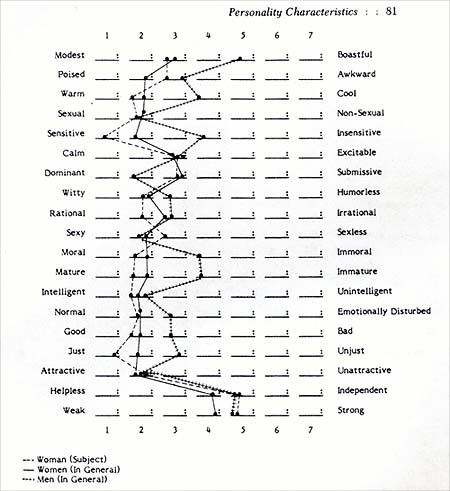
FIGURE 8.1 Perception of self-esteem for battered women, women in general, and men in general, as reported by battered women.
Women who are married, separated, or divorced are found to be more vulnerable than women who remain single. Those women who are also unemployed, and have young children at home, are at the highest risk to become depressed. The literature also suggests that the learned helplessness theory, field tested in this study, is synonymous with exogeneous depression, due to the perceived powerlessness over life events (Costello, 1978; Rizley, 1978; Seligman, 1975; Abramson, Seligman & Teasdale, 1978). Thus, we expected our sample of battered women to be in a high-risk group and for this to be reflected in high score on the depression inventory.
Our sample received an average mean score of 18.19, which is well above the high-risk cut-off score of 16 and twice as large as the epidemiological study samples’ means of 9.92 and 9.13. Thus, as predicted, the battered women in our study were highly depressed as measured by the CES-D. Further analysis revealed that the women in our sample who were young (18-24) were also more depressed than the older women. Although our sample’s mean score was higher than Radloff’s, it supports her data that indicate that younger women are more likely to become depressed than older ones. The battered women who were unemployed also showed considerably more depression on the CES-D than those who were employed outside the home, again consistent with the Radloff epidemiological study.
Surprisingly, for our sample the married women’s mean depression score was 16.86, while those not currently married scored 18.67. When we looked at just those who were still married to the batterer at the time of the interview, we found that their mean score was 16.50. This finding is inconsistent with our predictions that women living with violence would be more depressed than those who have escaped the battering relationship. Women out of the battering relationship had a mean score of 18.74. This suggests that depression can be a consequence of terminating a battering relationship as it is for terminating any other kind of relationship. However, it wasn’t until a number of years later that we began to realize that terminating a battering relationship did not stop the violence. Large numbers of batterers stalk, harass and use the legal system to continue their abusive control over the women long after the relationship has been terminated. In fact, some battered women are actually more safe when they live with the batterer than when apart (Walker, 1994). Thus, his continued abuse and the no-win situation they found themselves in may well exacerbate their depression.
Other measures of depression were also included in the interview. Most of these women did not appear to be clinically depressed to the interviewers. When comparing subjects’ high CES-D scores with these other indices on which the battered women performed inconsistently, it would still be expected that the depression scores would be associated with lower scores on the self-esteem measure. As reported, however, our subjects scored high on the self-esteem measure, presenting a puzzling contradiction particularly since semantic differential measuresusually tap into the affective domain. The learned helplessness and other depression theories would predict disturbance in the affective domain for battered women who score as high as our sample on the CES-D. One possible explanation is that the battered women modify their feelings about themselves in a positive way as a coping style to continue to function despite chronic depression. This explanation would fit with Seligman’s theories of optimism as an antidote to depression (Seligman, 1991, 1994).
We also expected to find a pessimistic view of the world to be a concomitant cognitive perception for battered women. Such negative cognitions would be predicted by Beck’s (1976) theories on depression. Again, our sample of battered women showed inconsistent thought patterns on questions designed to measure cognition. For example, one-half of the subjects agreed with the following statements:
However, only one-third agree with these similar statements:
On a question measuring cognitive perception of other people’s motives toward the subject, 59% of the battered women felt people would generally try to be fair. Thus, our sample of battered women was not consistent in demonstrating the negative cognitions and moods we would have expected.
Lewinsohn’s behavioral reinforcement theory of depression might help to explain some of our findings on depression (Lewinsohn, 1975; Lewinsohn, Steinmetz, Larson, & Franklin, 1981). It postulates that depression occurs when there is a sharp reduction in the amount of positive reinforcement people receive. A lower rate of rewards would result in a lower response rate, or passivity, which then spirals downward into a depressed state. Cognitive and affective disturbances occur simultaneously with the downward spiral or are a consequence of the lowered reinforcement rate. This is similar to the learned helplessness theory that postulates the lowered behavioral response rate or passivity, as a learned response to uncontrollable trauma. It also postulates distorted perceptions in the cognitive and affective domain. While the original learned helplessness theory did not specify when these cognitive and affective perceptions occurred, the reformulations suggest an attributional style which serves as a cognitive set for a depressive state to develop.
The analysis of lower reinforcement rates presented with the results of the Walker Cycle Theory of Violence, discussed in Chapter 10, demonstrates that women who were out of the battering relationship left after the ratio between the tension-building and loving-contrition phases sharply diverged. Women who were still in the battering relationship seemed to report more positive reinforcement (loving-contrition) following the last battering incident they discussed. According to the Lewinsohn behavioral reinforcement model of depression, these battered women might have been scoring lower on the CES-D scale because they were still receiving some rewards from the relationship, despite the negative factor of the violence. Once the cost benefit ratio changes, however, and the rate of reinforcement decreases, then the women may be more inclined to leave the relationship, but may subsequently become depressed as a result of the separation.
Since we did not match those women who scored low on the CES-D with those who had high phase three loving-contrition rates, this explanation cannot be directly corroborated. But clinical reports consistently refer to battered women who return to their abuse because they were too lonely, too frightened, too overwhelmed, and too depressed to continue on their own.
To ascertain the relationship between the CES-D and other personality indices, we correlated the seven summary scores and added the current health scale scores, since depression is often related to poor physical health.
The correlation matrix shows a strong relationship between anomie, the measure of helplessness we’ve included, and the CES-D, with an r of .40. The CES-D is also correlated with the Powerful Others (r = .35) and Chance (r = .36) dimension scores on the Levenson IPC. This suggests that there may be a cognitive component to their depression that isn’t measured very well by affective measures. The high correlation of the CES-D with the Health Scale (.46) and with the self-esteem measure (.36) would also support that our subjects were really clinically depressed. The correlation matrix strengthens the faith we have in the robust nature of the CES-D as a measure of this depression.
Radloff and Rae (1979) presented another model of depression, which may be the most helpful in interpreting our results. This model suggested that there is a causal sequence in which affective, cognitive, behavioral, and somatic realms of symptoms are logically linked. It looks at susceptibility or vulnerability, and exposure to those factors that precipitate or trigger these vulnerabilities. Radloff and Cox (1981) suggest that:
The cognitive dimension of depression (the expectation that goals cannot be reached by any responses available to the person) is a basic factor in learned susceptibility to depression. Depression itself will not occur unless a goal situation occurs. In other words, the precipitating factors that activate this kind of susceptibility are goals (rewards desired or punishments to be escaped or avoided). Given a goal situation and the expectation that nothing the person can do will influence the outcome, then the person is unlikely to try to do anything. This lack of activity is like the motivational/ behavioral dimension of depression. Depending on the environment and the generality of helpless cognitions, such as a person would be faced with more and more inescapable punishments and fewer and fewer rewards. This would be expected to result in pain, anxiety, sadness and lack of enjoyment (the affective dimension of depression). (p. 339)
Radloff’s work has identified a sex difference in susceptibility and in exposure to precipitating factors of depression. Being a woman and having been raised with sex role stereotyped behavior has conditioned learned patterns which make women who must deal with violent relationships more susceptible to developing depression. It is probable that the cognitive attributions associated with developing learned helplessness are different from the more generalized sense of hopelessness that Lewinsohn predicts develops at the same time or following a lowered reinforcement rate period. Our results, then, support the prediction that battered women will be at high risk for depression. We did not anticipate, however, that it would still be present in women who have long been out of the violent relationship. This finding is puzzling in a manner similar to those who have used the MMPI to assess battered women and find significant elevations on the depression indices.
Another possible explanation for the varied stages of depression measured by the CES-D and inconsistencies with other measures we used has emerged during the intervening years. Seligman has moved from the concept of learned helplessness that he created in the laboratory (see Chapter 9 for further discussion) to the prevention of depression by changing people’s outlook to an optimistic rather than pessimistic style. We know that the impact of a particular trauma is different depending on the mental health status of the individual at the time of trauma, the prior resilience of coping strategies, the person’s stress response, and the level of support received from the community. Perhaps the healing process is also individualized and the measures used here picked up the stage of healing in victims that was not otherwise recorded. Since depression is one of the areas that is significantly impacted upon in most trauma victims, often measured as an avoidance symptom, we may have found major differences had we had the ability to use one of the newer impact from trauma measures such as the Trauma Symptom Inventory (TSI) that gives several different depression indices (Briere & Elliott, 1998). In any case, this issue still needs further study.