A newer version of the platform is available. Please refresh the page.
Sign Up to Get information about Sales & Events Click Here
A newer version of the platform is available. Please refresh the page.
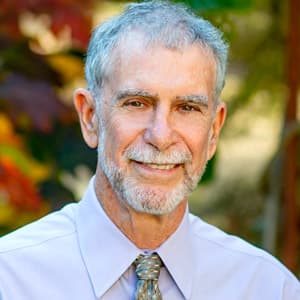
Ofer Zur, Ph.D., licensed psychologist, APA Fellow, and founder of the Zur Institute.
Ofer Zur, Ph.D., founded the Zur Institute in 1995 and directed it for twenty-five years, building one of the first online continuing education programs for mental health professionals. A licensed psychologist, Fellow of the American Psychological Association, author, forensic and ethics consultant, and expert witness, Dr. Zur was among the most influential and independent voices in psychotherapy ethics of his generation.
Dr. Zur passed away on February 19, 2025, at the age of 74. His courses, books, and the Institute he built continue his work: teaching clinicians to think critically, reject dogma, and practice with both ethical rigor and human warmth.
A Life of Uncommon Range
Ofer Zur was born in Tel Aviv, Israel, in 1950. Before psychology, he lived several other lives: he served as a lieutenant in the Israeli army, earned a B.Sc. in physical chemistry from the Hebrew University of Jerusalem in 1975, and worked as an oceanographer and researcher in East Africa. Those experiences, especially his wartime service, shaped the questions that would define his career: how people come to see one another as enemies, how institutions calcify into dogma, and what genuine ethical thinking demands.
After emigrating to the United States, he earned an M.A. in Counseling Psychology from Lesley College in Cambridge, Massachusetts (1981), and a Ph.D. in Psychology from the Wright Institute in Berkeley, California (1984). He practiced psychotherapy in California for more than three decades (CA license PSY10763) and taught for many years at Bay Area graduate schools including the California School of Professional Psychology (CSPP) and the California Institute of Integral Studies (CIIS).
Dr. Zur was best known for challenging one of the profession’s most entrenched assumptions: that all dual relationships between therapists and clients are inherently harmful. With Arnold Lazarus, he co-edited Dual Relationships and Psychotherapy (Springer, 2002), the landmark volume that reopened the field’s debate on therapeutic boundaries and argued for context, clinical judgment, and critical thinking over rigid, fear-based risk management.
He developed that work across four decades of writing, teaching, and forensic practice:
His books drew endorsements from leading ethicists in the field, including Frederic Reamer and Gerald Corey, and his dozens of articles and book chapters on ethics, standard of care, boundaries, telehealth, and the psychology of enmity remain widely cited.
From 1990 onward, Dr. Zur served as a forensic consultant and expert witness, advising attorneys, licensing boards, and courts on standard of care, scope of practice, therapeutic boundaries, and ethical violations. He was invited to submit an amicus brief to the Minnesota Supreme Court on psychotherapy and mental health standards, and consulted on cases across the United States. His forensic work informed his teaching: his courses on ethics, risk management, and license protection are grounded in what actually happens when clinicians face boards and courtrooms.
Pioneer of Independent Practice and Digital Ethics
Dr. Zur was an early and vocal advocate of the managed-care-free private practice, authoring The Complete Fee-for-Service Private Practice Handbook and training thousands of clinicians to build ethical, sustainable independent practices. He was also ahead of the field on technology: he wrote and taught on telehealth, digital ethics, and the clinical implications of Google, social media, and texting years before these became mainstream CE topics, and built the Institute’s TeleMental Health and Digital Ethics certificate program.
Dr. Zur directed the Institute from its founding in 1995 until 2020, when leadership passed to Glenn Marks, Ph.D., MBA. The Institute continues to maintain, review, and update the courses Dr. Zur authored so that they reflect current law, ethics codes, and standards of care, while preserving the qualities that made his teaching distinctive: intellectual honesty, clinical usefulness, and a refusal to accept “because we’ve always said so” as an ethical argument.